GRANITE CROSSING GOLD RUSH MUSEUM
Stories of the diggings, the people, and the land of the Sierra foothills
At the bend of Alder Creek and the old wagon road, Granite Crossing keeps watch over the Sierra Nevada gold country. The galleries follow the miners who came seeking fortune, the Chinese immigrants who built lives in mountain camps, the Native peoples who endured invasion and dispossession, and the labor that kept the diggings running.
CURRENT EXHIBITIONS
Four rooms, one difficult and enduring history
GALLERY I
THE FIRST FLAKES
Marshall's discovery, the river routes, and the first rush toward the Sierra.
GALLERY II
LIFE IN THE DIGGINGS
Tools, tents, ledgers, food, wages, and the daily work behind a miner's claim.
GALLERY III
GOLD MOUNTAIN
Chinese immigrant communities, mutual aid, commerce, and the pressure of exclusion.
GALLERY IV
LAND AND MEMORY
Nisenan homelands, environmental change, resistance, and the people whose stories were pushed aside.
FROM THE COLLECTION
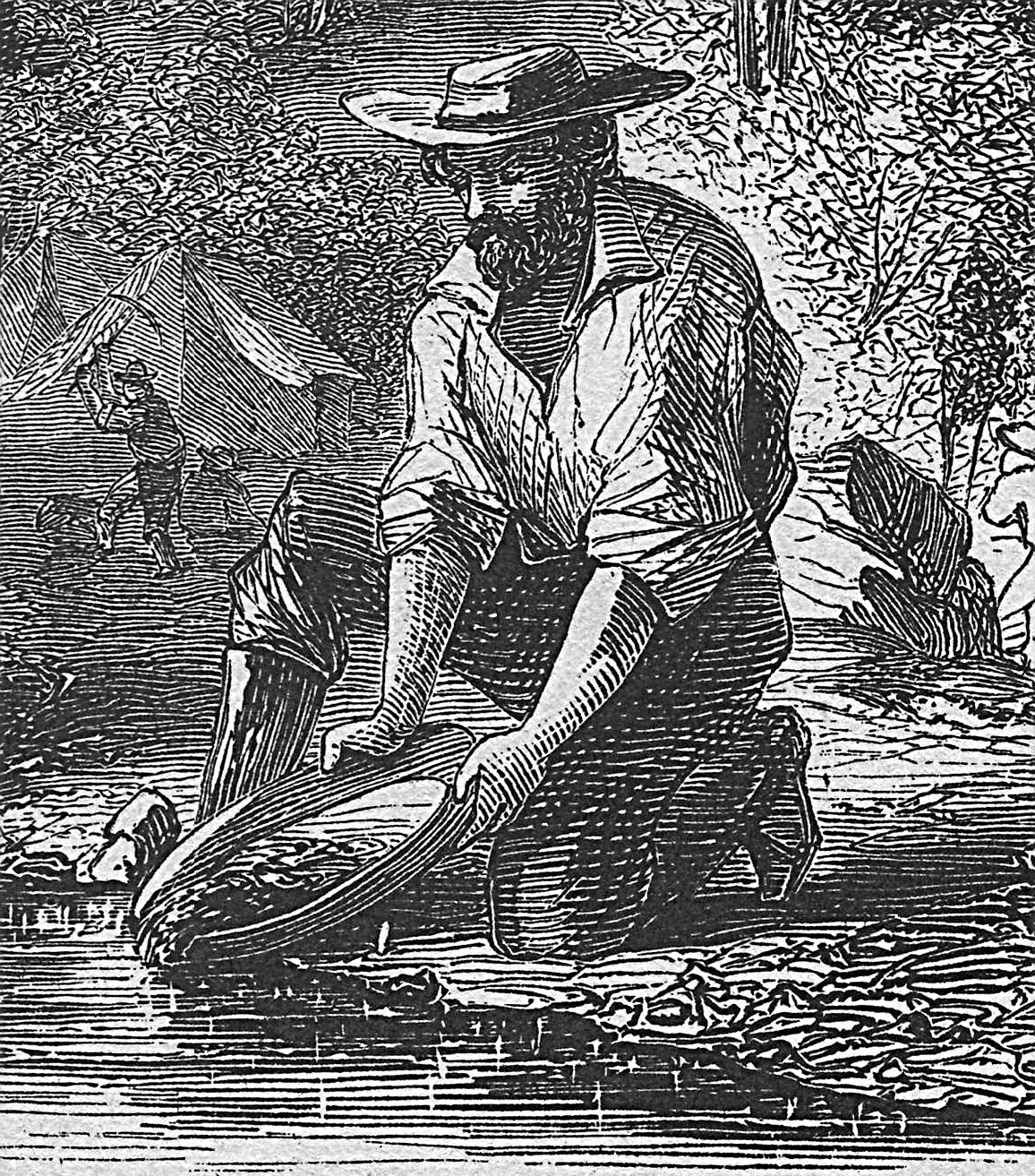
Gold panning on the Mokelumne River, Harper's Weekly, 1860. Public domain.

Sierra Nevada Mountains, California, circa 1872. New York Public Library. Public domain.
Featured artifacts and documents from Granite Crossing and the upper watershed
ARTIFACT NO. 104
THE ROCKER
A hand-built rocker used to wash gravel and separate gold from river sediment.
DOCUMENT NO. 082
THE CAMP LEDGER
A record of supplies, wages, debts, and the unequal price of life in the camps.
ARCHIVAL MAP NO. 019
THE RAVINE MAP
A map of Granite Crossing's streams and claims, read alongside the Native landscape that preceded them.
GRANITE CROSSING, 1849 TO TODAY
A timeline of foothill transformation and memory
1848
Gold is found at Sutter's Mill, and word travels down the river roads.
1849
Emigrants, merchants, laborers, and families converge on the Sierra foothills.
AFTER THE RUSH
Granite Crossing becomes a lasting town while its mines, waterways, and communities bear the marks of extraction.
TODAY
The museum preserves evidence, asks difficult questions, and invites the public to look again.
PROGRAMS & PUBLIC DAYS
Educational offerings, gallery walks, and community history
PUBLIC PROGRAM
GUIDED TOURS
Walk the galleries with a museum guide and follow the objects back to the camps.
EDUCATION
SCHOOL VISITS
Hands-on lessons in mining technology, migration, labor, and Native California history.
EVENTS
ORAL HISTORY EVENINGS
Gatherings for stories of Granite Crossing, the high country, and the families who carried them forward.
PLAN YOUR VISIT
Visitor information, hours, and location
LOCATION: 101 QUARTZ STREET, GRANITE CROSSING, CALIFORNIA
HOURS: Open Wednesday through Monday, 10 am to 5 pm
ADMISSION: $12 adults, $8 students, free for children under 12
DURATION: Allow one to two hours for the permanent galleries.